Image Gallery B
Disclaimer: The following images are not part of the official film. They are conceptual images extrapolated from anecdotal material, conjecture and third-party content. The images add depth to Katie’s untold back story as well as highlight her influence beyond the film.
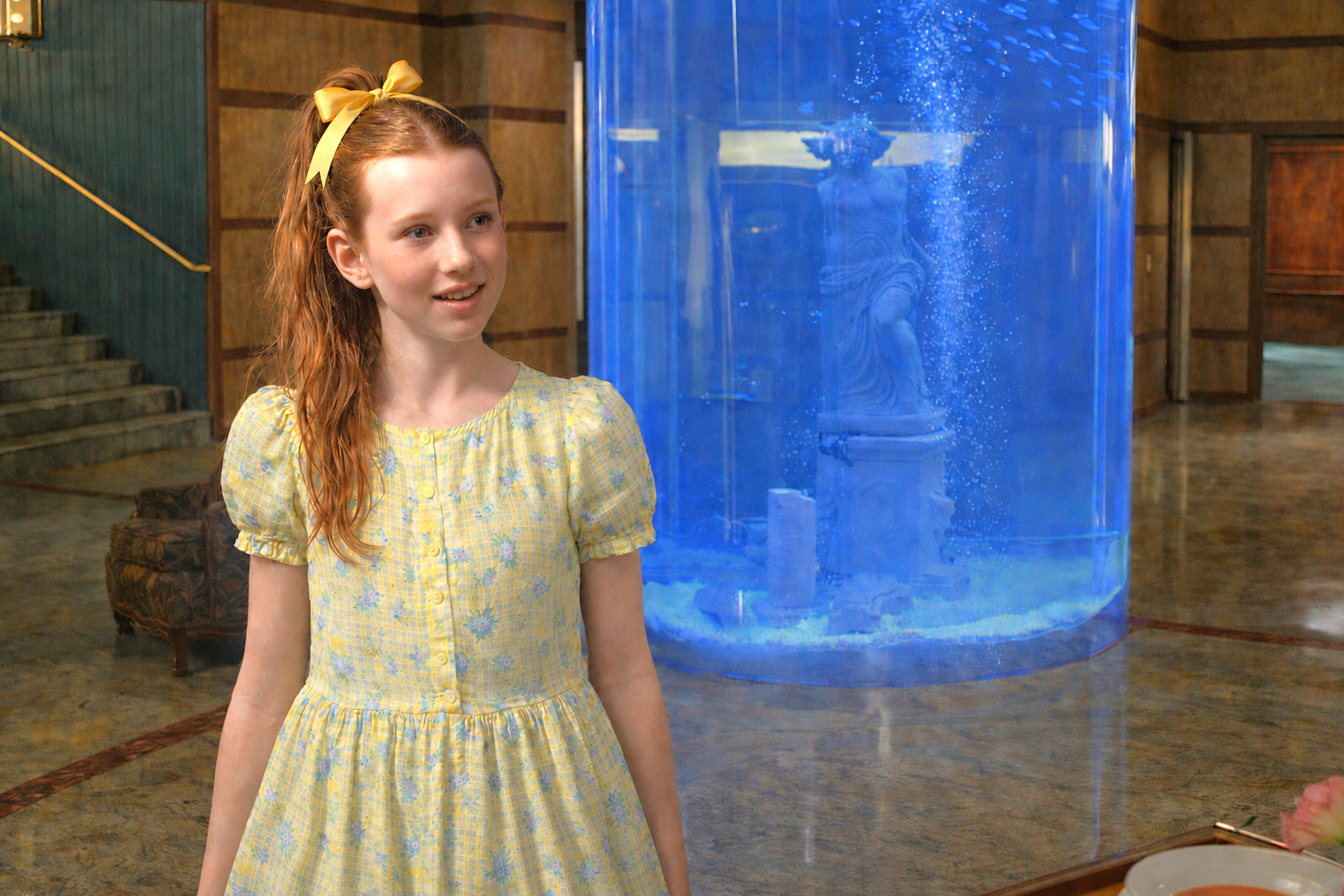
Figure 1
Dressed for travel, Katie excitedly comes aboard ship. Although the film did not delve this far back into her story, Epps examines this same dress from Katie’s steamer trunk 40 years later. Note her authentic high ponytail.
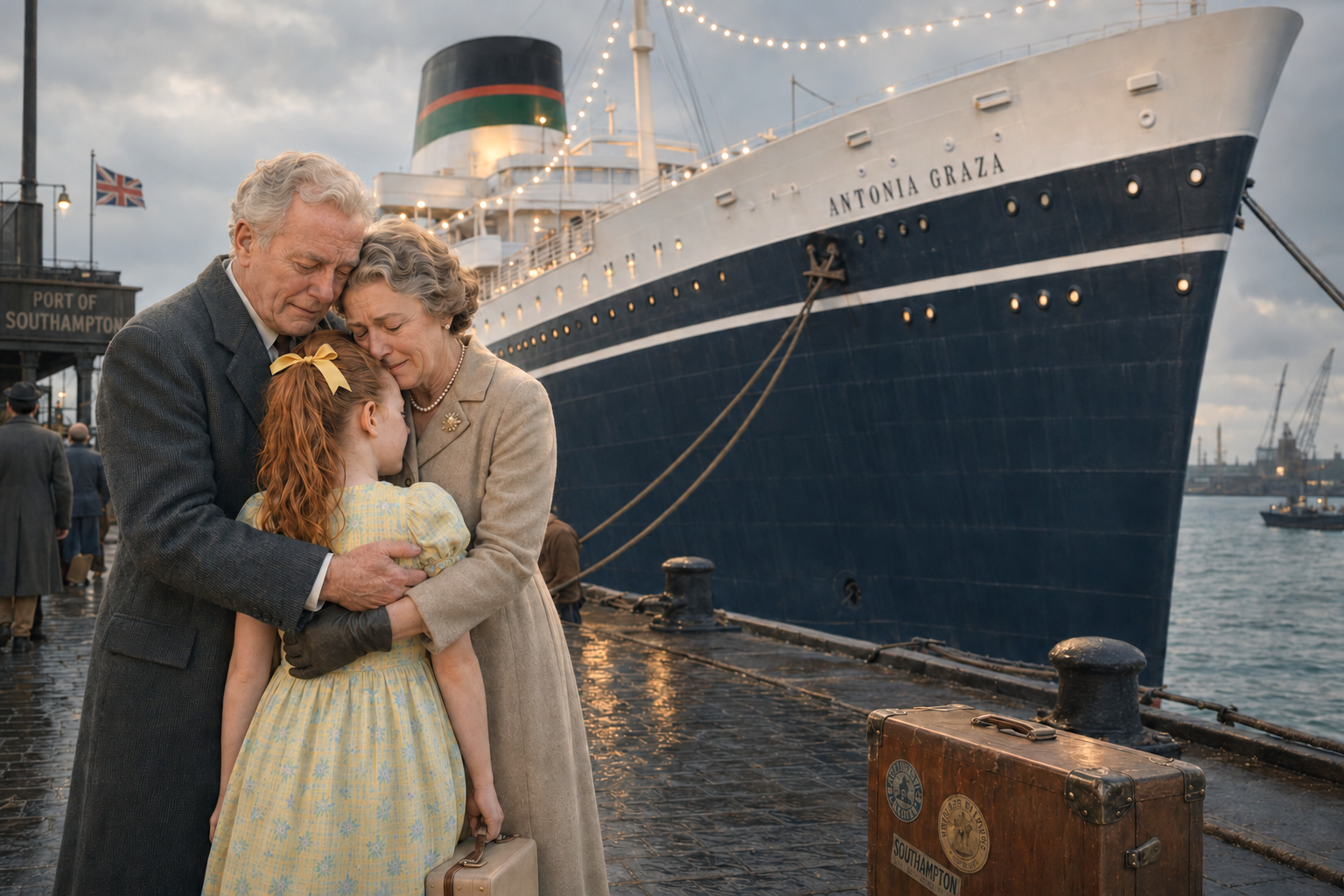
Figure 3
The love for a child and the love of a child is one of the most transformative dynamics in human experience. Here, Katie’s grandparents bid her an emotional farewell, not realizing this would be their final farewell, making this conceptual scene even more poignant.
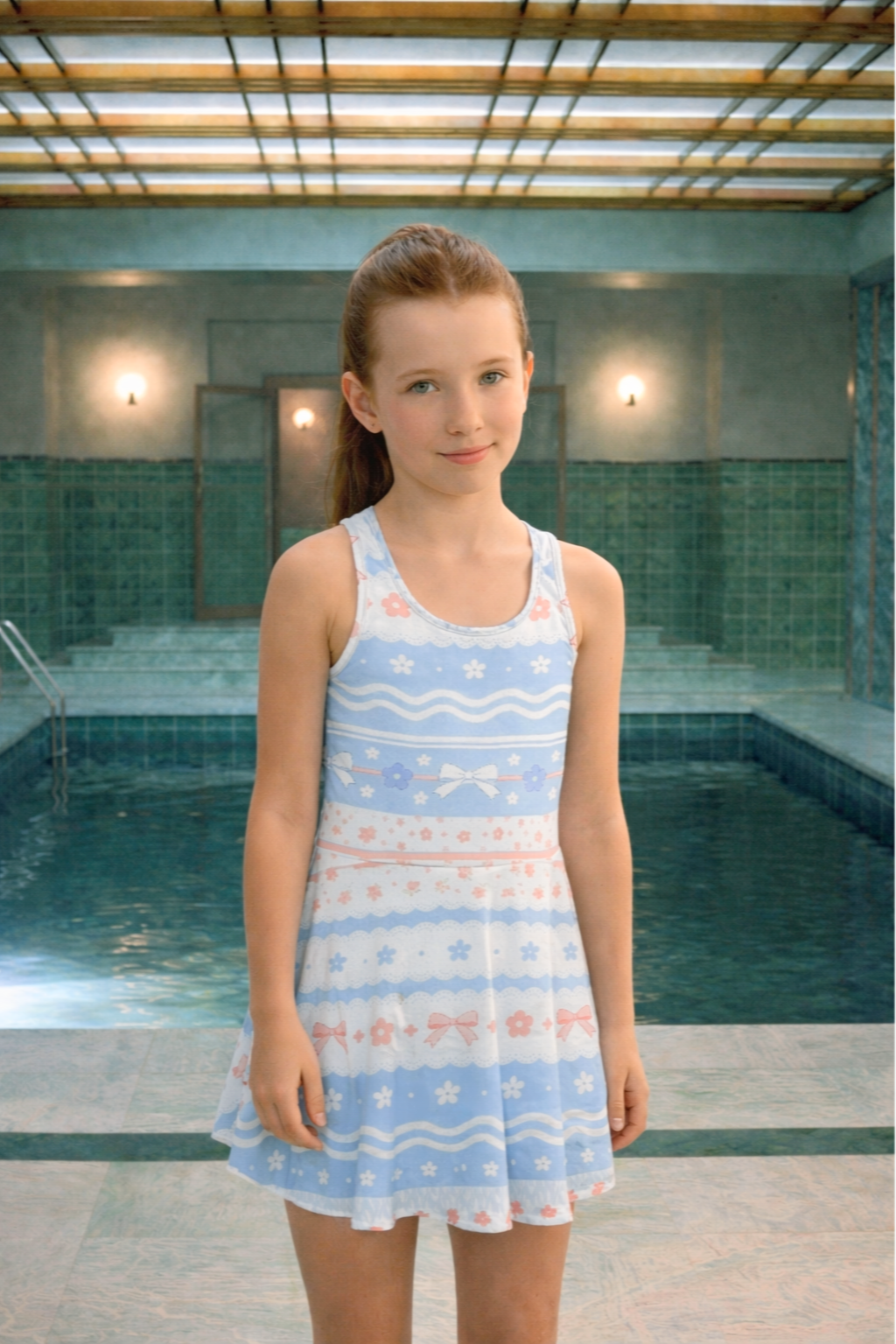
Figure 5
A theoretical pool scene where Katie curiously looks at a Charon mural before the carnage was never developed. However, her innocence and childlikeness are on full display in this vintage, modest swimdress. When told the mural was a depiction from a story called The Divine Comedy she acknowledges, “Well, that picture is certainly – not very funny!” Others chuckle at her childlike response, but she finds it no laughing matter.
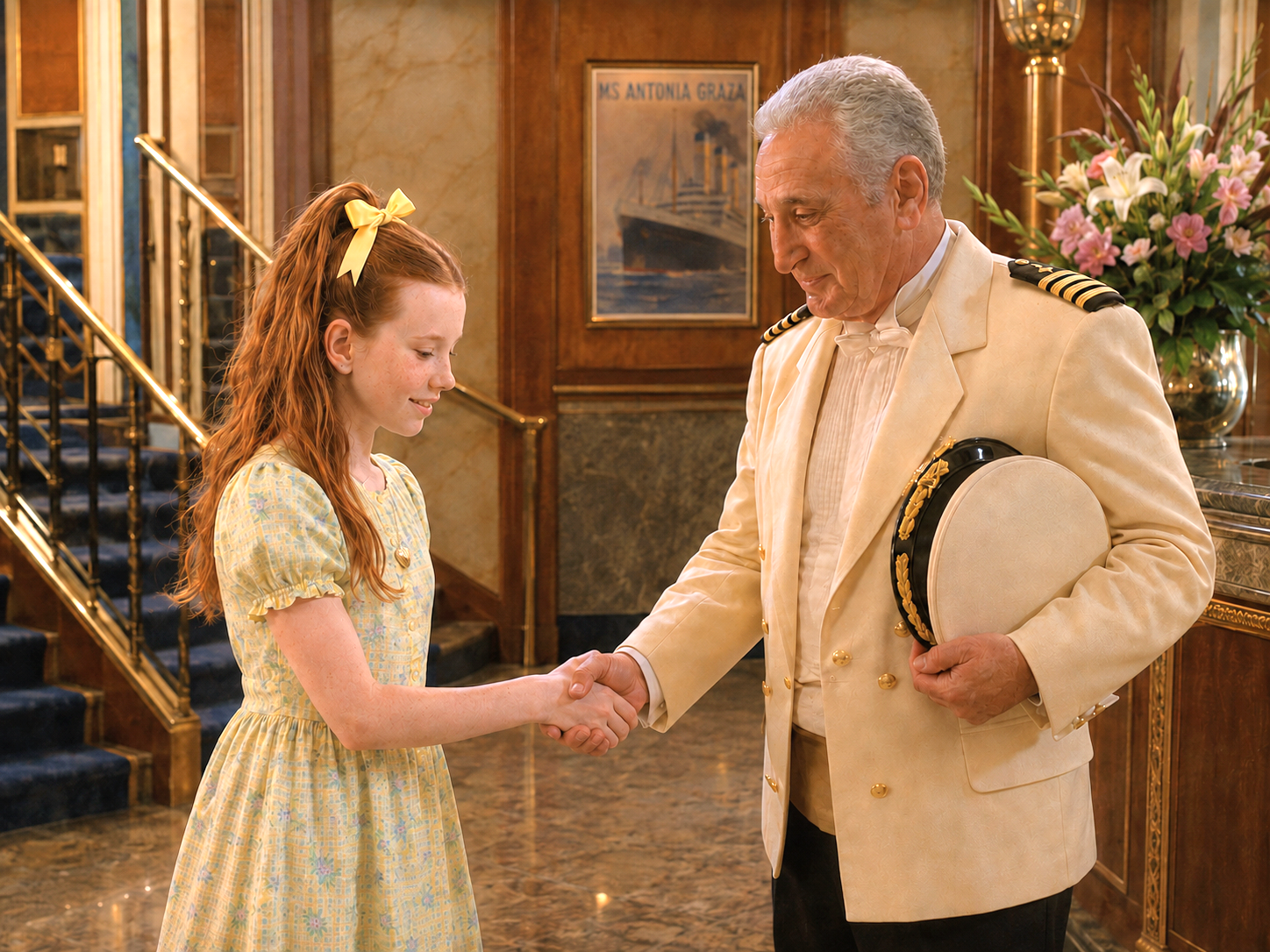
Figure 7
A somewhat timid Katie is welcomed aboard by Captain Ruggiero as his special guest in this unfilmed concept.

Figure 9
Katie and the “friendly officer” admiring the view near the fantail of the ship. Unlike the typical horror child, she was loved and cared for, thus establishing her with a strong personal and moral identity.
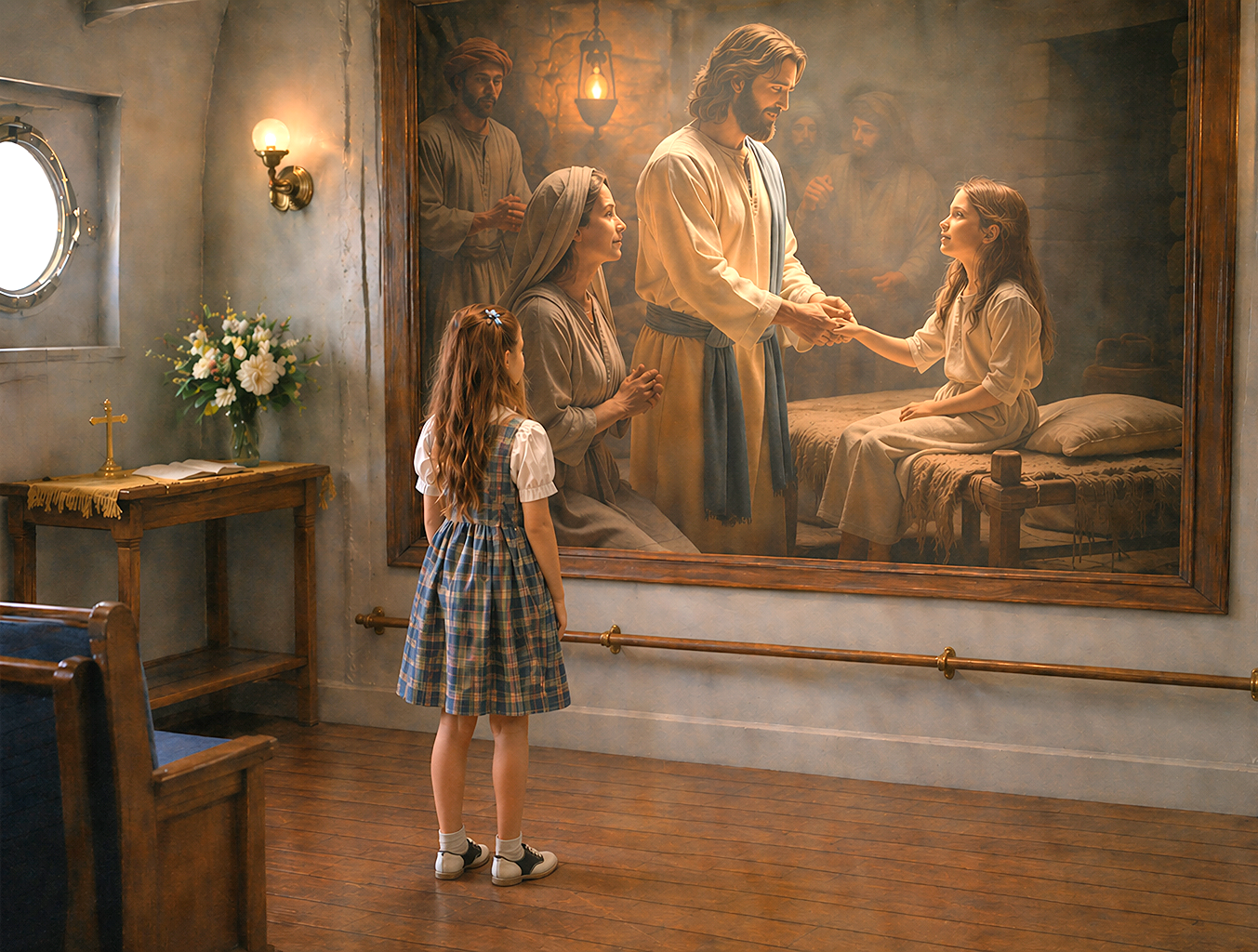
Figure 11
This symbolically charged prayer chapel scene featuring the painting of Jairus’ 12-year-old little girl being raised from the dead helps ease the pain of Katie’s impeding loss. Scene not filmed.
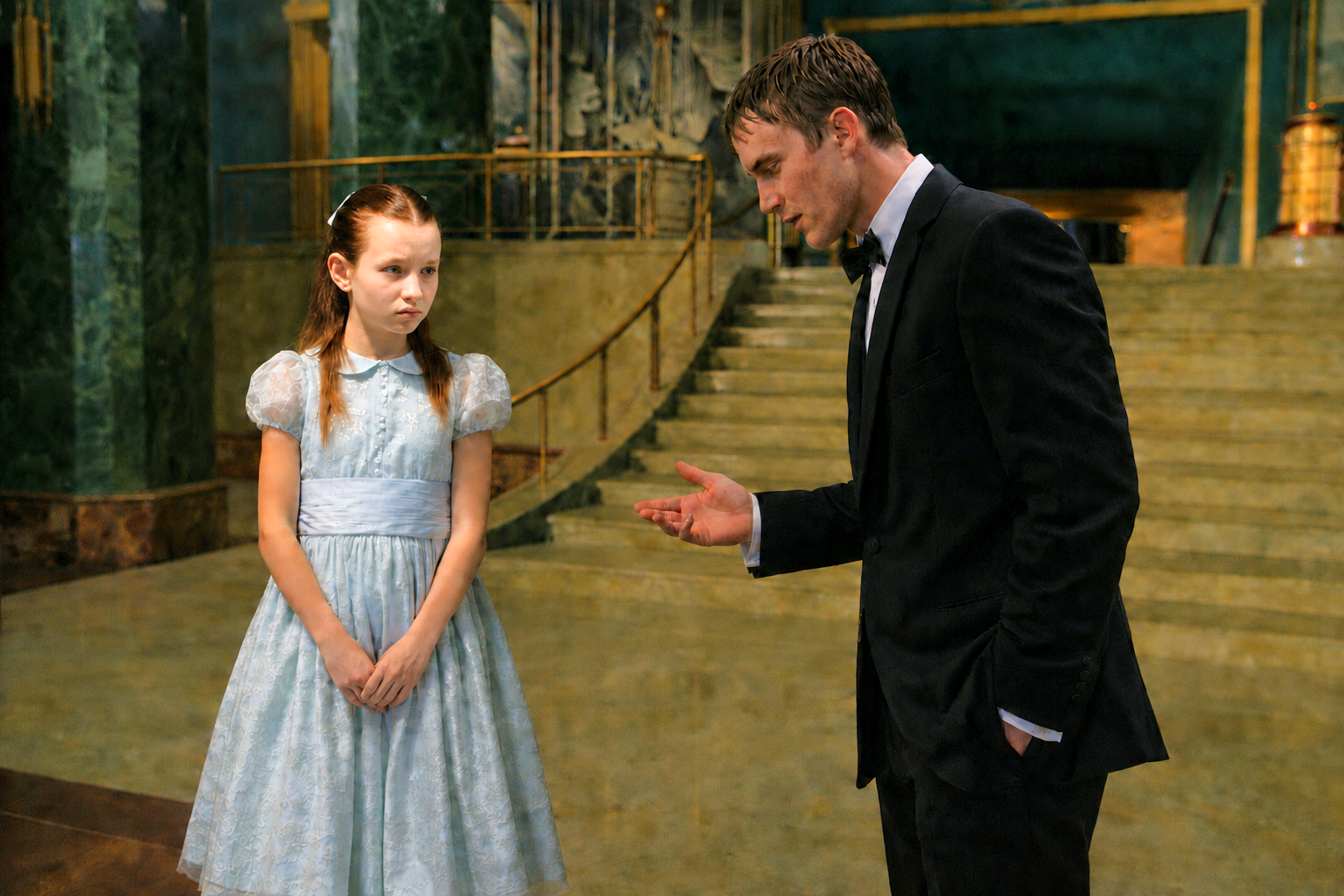
Figure 13
Not realizing a child was onboard, Ferriman warns Katie to stay out of his way while telling her God has forsaken her for allowing her and everyone to die. He tries to convince Katie her faith is in vain since God evidently does not care, nor has not the power to stop him and his demonic management. Although hurting and frightened, Katie refuses to listen, setting up a 40-year spiritual conflict. Scene never produced.
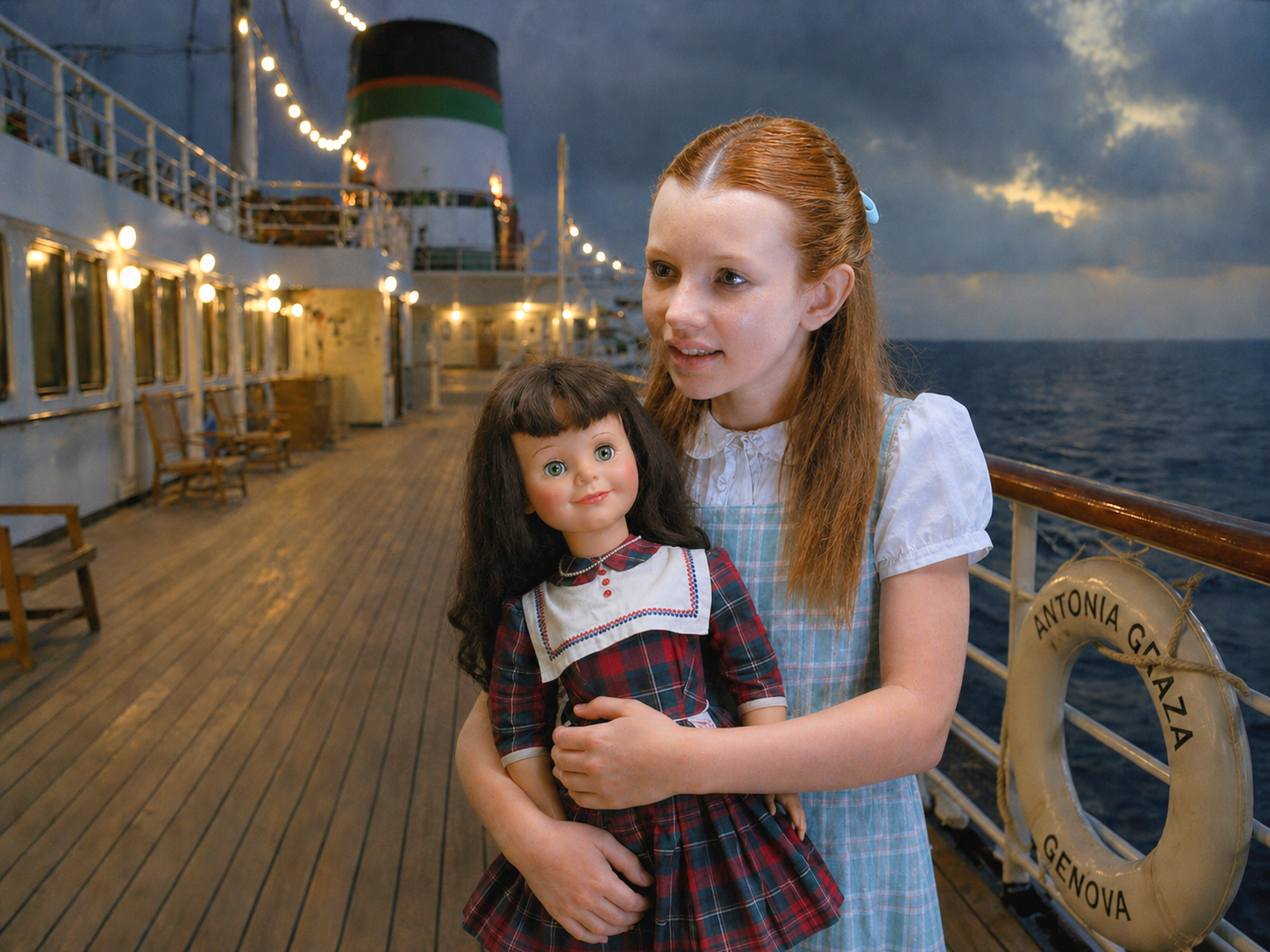
Figure 2
In horror, dolls are often used in a sinister way. However, Katie’s dolls invert the trope. Along with her other possessions, Katie’s dolls help to memorialize her and testify to her unfinished life. Scene only conceptual.
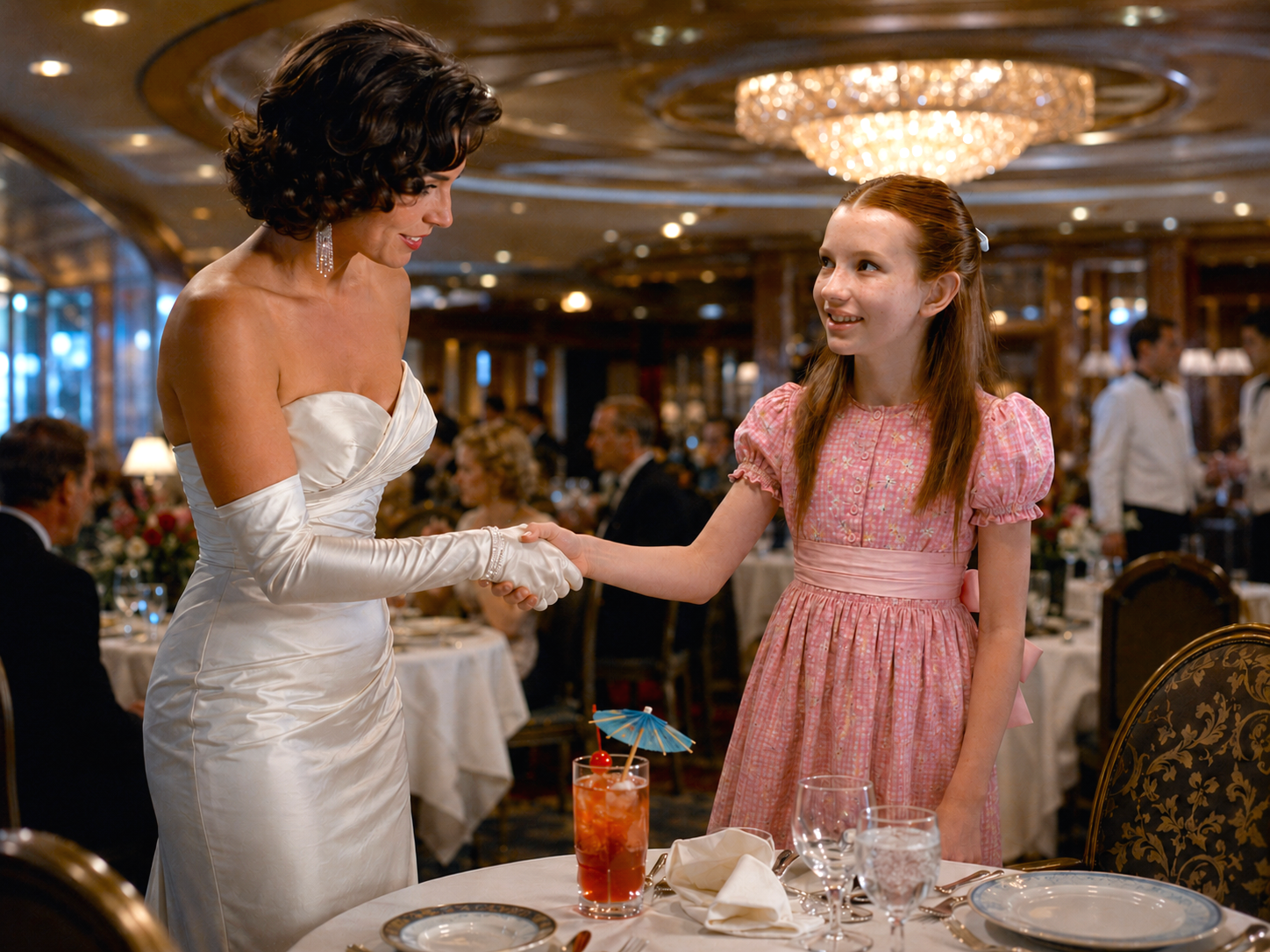
Figure 4
Katie meets Francesca. She describes Francesca as “an Italian version of Marilyn Monroe.” At first, Francesca makes a half-hearted attempt to spare Katie from the massacre by inviting Katie and her doll to her table, but evidently does not follow through. Note the Shirley Temple beverage Katie has on the table.
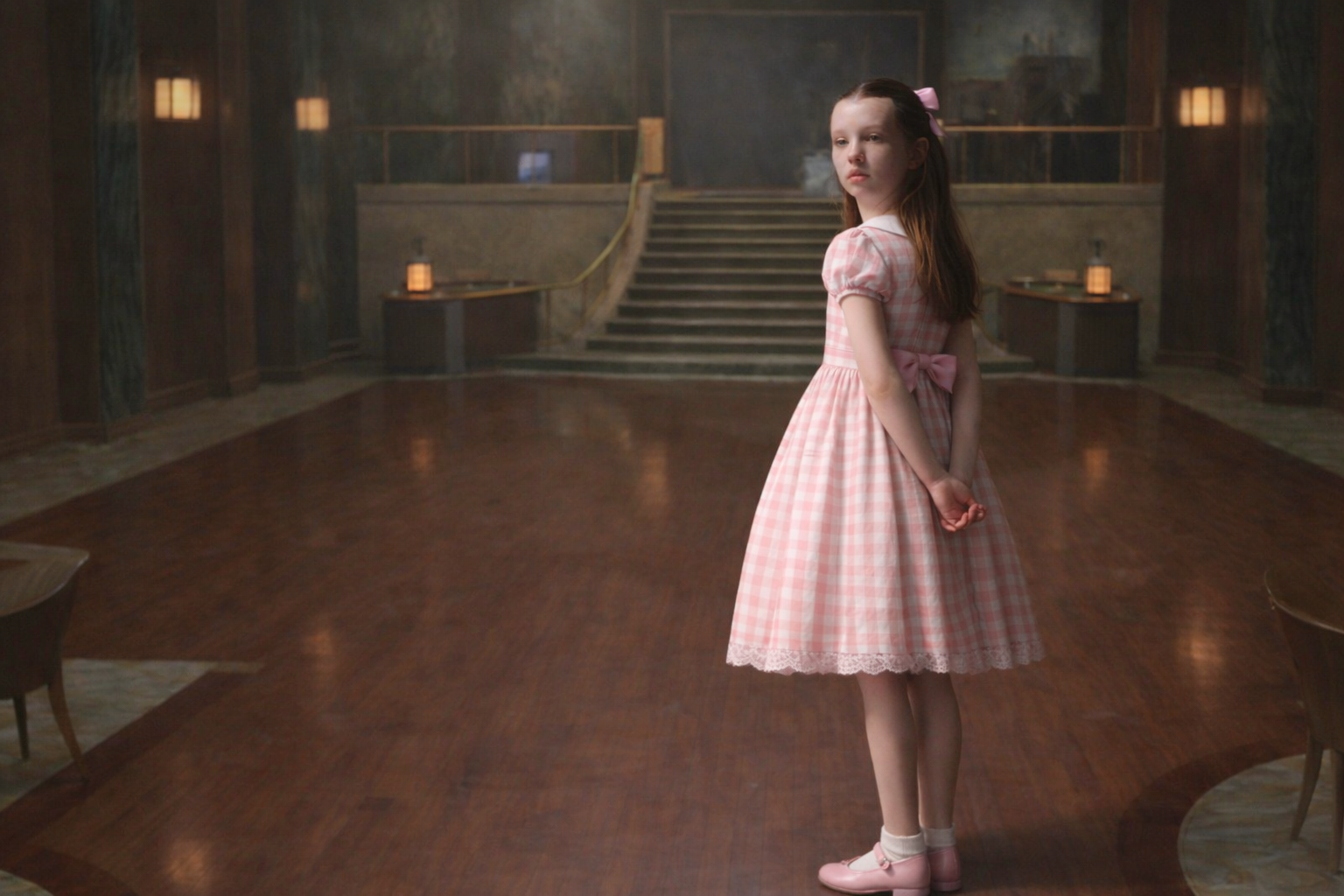
Figure 6
A serene Katie stands in the ambiently lighted ballroom intrigued by the murals of heavenly and demonic figures from the Divine Comedy. Gingham dresses were ubiquitous wear for little girls at the time. This is another tentative rendering which never made it into the film, but would have greatly enhanced the emotional and narrative impact.
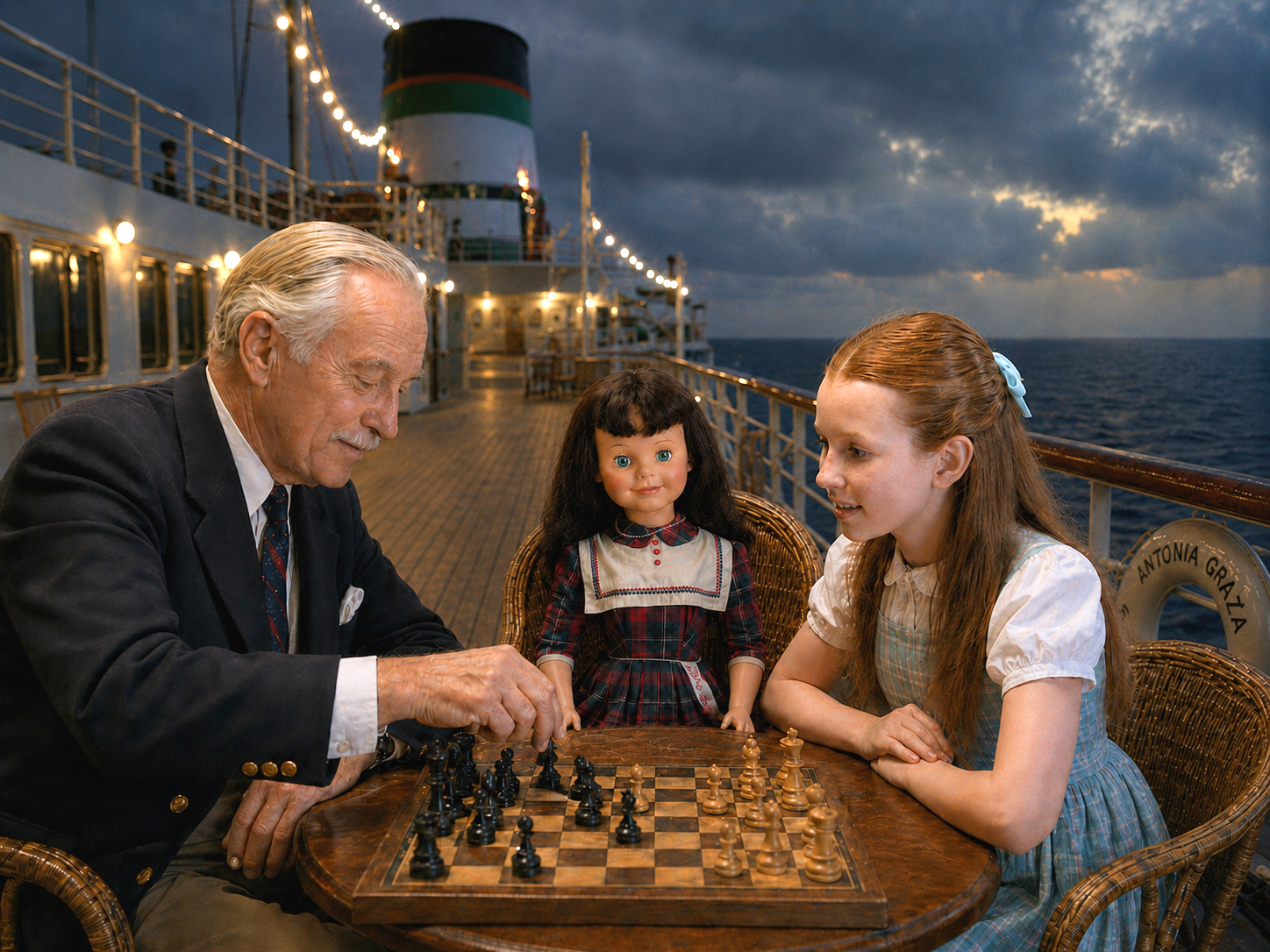
Figure 8
Seeing a young lass playing chess by herself with a doll motivates retired British MP, Lord Randal to offer to play with Katie, thus forming a cross-generational friendship. Scene hypothetical.
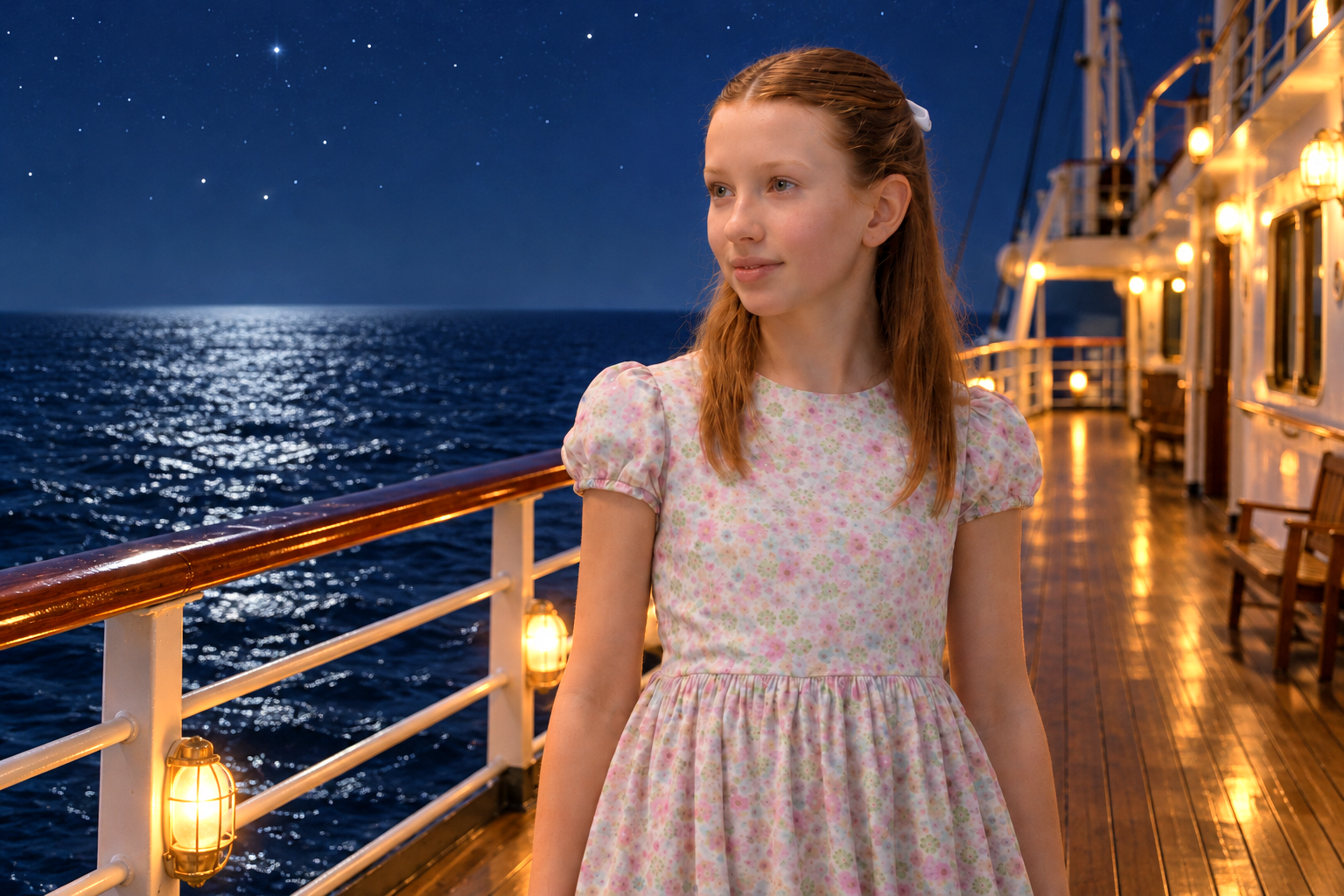
Figure 10
Enamored by the clear starlit sky, Katie recites Psalm 147: 3-4, foreshadowing her impending suffering and role as a guide, but also establishing her as a person of faith. Symbolically, she sees divine order and light within the darkness. Any faith background was only hinted at in the film.

Figure 12
Fellow Englishwoman, Margret brushes Katie’s tangles after a swim. As Katie focuses on the Charon mural again, Margaret explains Charon is ferrying people to hell. Katie’s response is empathy and opposition. Unlike the adults, Katie sees Charon as morally real not just an abstraction.
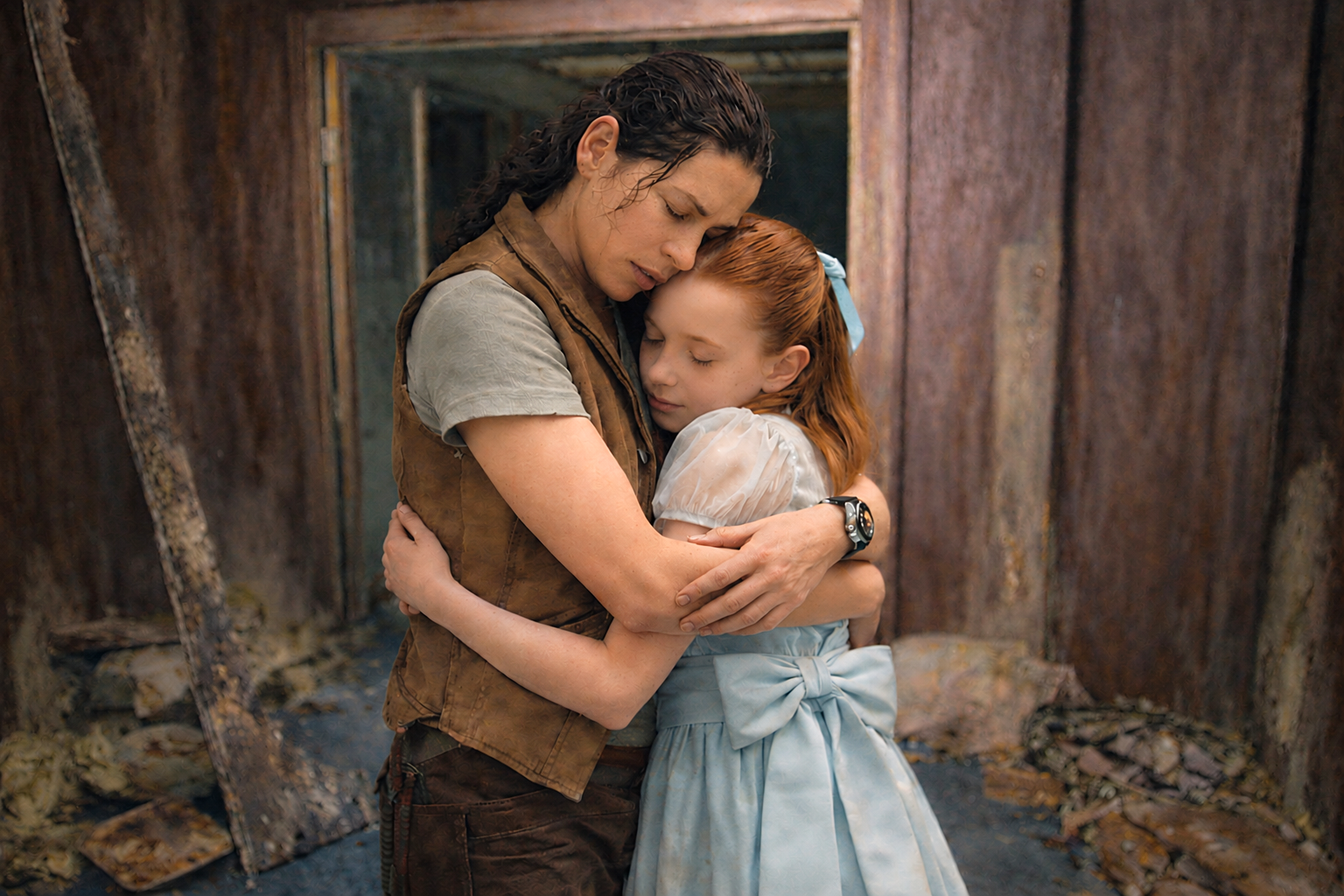
Figure 14
This depiction of Katie and Epps sharing a tender mother/daughter like moment was not in the film. Not only is this blatantly un-horror, it would have reinforced horror does not change Katie into something meaningful—It fails to contain who she already is. She is still a child who longs to love and be loved, underscoring Emily Jane’s description of her as “a very sweet girl.”