Resource Library
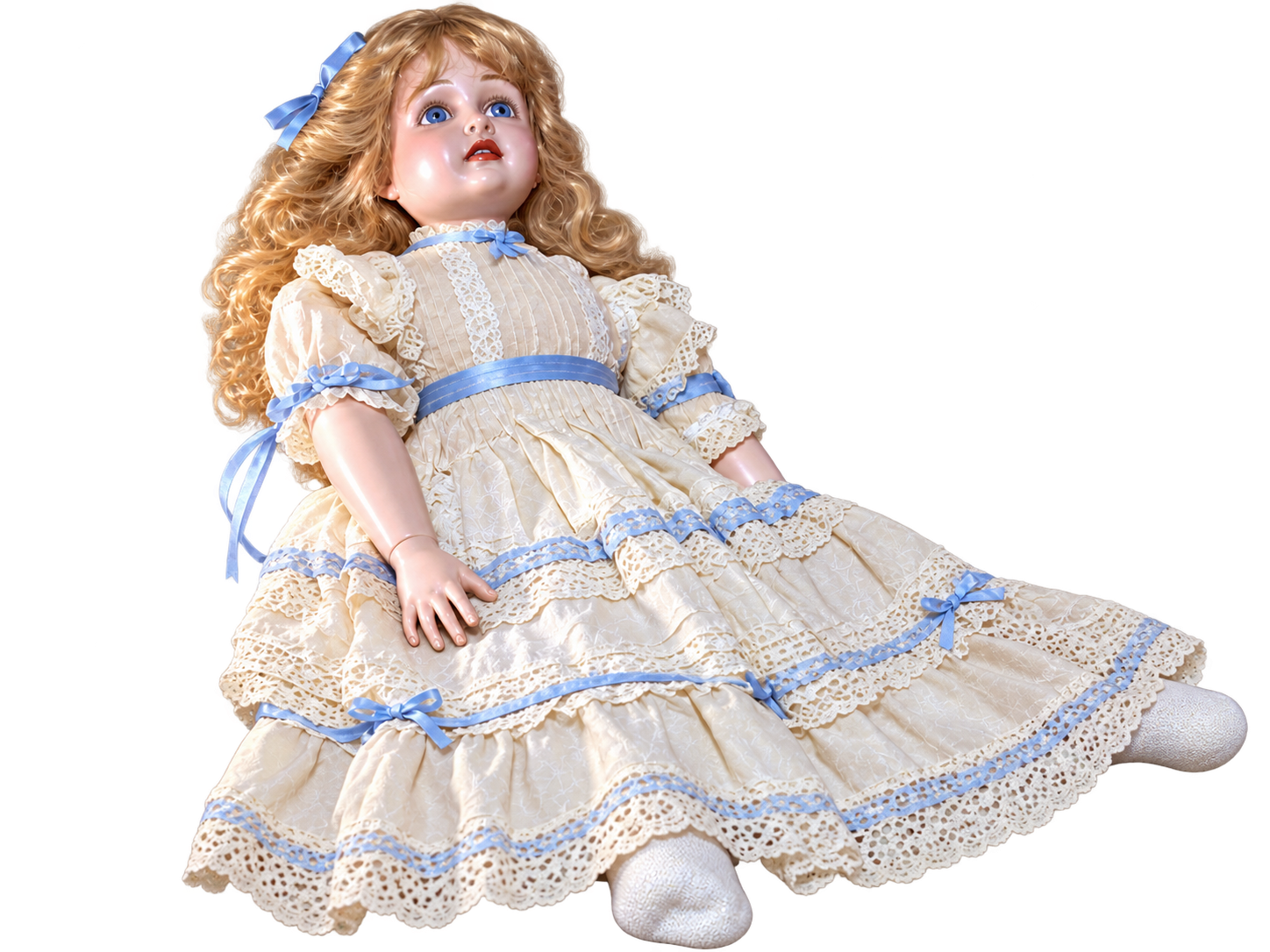
Want to learn more about Katie’s world within the film, horror theory, theology, historical culture and childhood theory? This library page is a good starting point. For a more comprehensive look, check out the reference section of the full manuscript.
General Interest
The Film —
The Internet Movie Database (IMDb) provides photographs, trailers, clips, cast information and general production information for visitors who want an introduction to the film without necessarily watching it in full.
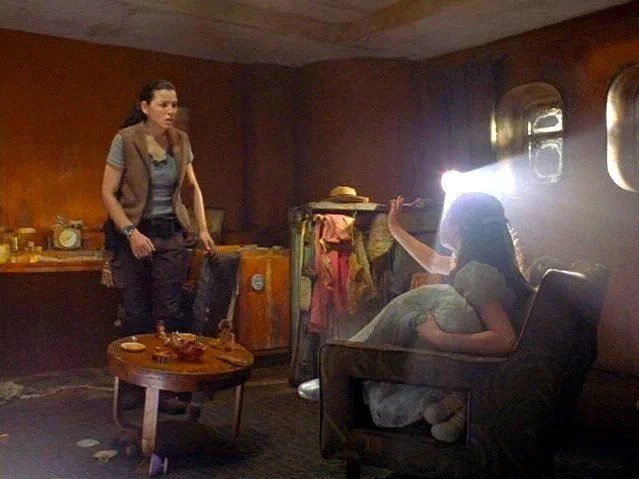
Katie warning Epps — A short scene illustrating Katie’s protective role.
Film and Horror Studies
Learning about horror theory and how horror children are portrayed provides context for understanding how Katie departs from the typical clichéd role. As shown in the manuscript, comparing Katie with other horror children can be a fascinating topic of study. Katie provides a useful case study in how preserved innocence can generate emotional and narrative meaning without relying on the usual corruption of childhood.
Recommended Reading
Noël Carroll — The Philosophy of Horror. Routledge, 1990.
A foundational study of how horror constructs monsters, fear and categorical disturbance.
Carol J. Clover — Men, Women, and Chain Saws. Updated ed., Princeton UP, 2015
Provides part of the theoretical background against which Katie’s unusual construction becomes easier to see.
Barbara Creed — The Monstrous-Feminine. Routledge, 1993
Useful for thinking about horror, embodiment, gender, and the boundaries of the monstrous.
T. S. Kord — Little Horrors. McFarland & Company, 2016.
Useful for examining cultural constructions of threatening or corrupted children.
Online Reading
Thijs Dekker. The Disturbing Child in Cinema: A Discussion of Agency and Ambiguity. 2023. Leiden University, Master's thesis. Leiden University Repository, https://studenttheses.universiteitleiden.nl/handle/1887/3641776
Catherine Lester. The Children’s Horror Film: Characterizing an “Impossible” Subgenre. The Velvet Light Trap, no. 78, Fall 2016, pp. 22-37. Project MUSE, doi.org. https://www.miskatonicinstitute.com/wp-content/uploads/2016/07/Lester-VLT-journal-article.pdf
Karen E. Macfarlane. "Creepy Little Girl." Gothic Studies, vol. 25, no. 1, Mar. 2023, pp. 1-19. Edinburgh University Press, doi.org.) https://www.euppublishing.com/doi/10.3366/gothic.2023.0150
Hans Staats. Don’t Look Now: The Child in Horror Cinema and Media. 2016. Stony Brook University, PhD dissertation. Stony Brook Theses and Dissertations Collection, commons.library.stonybrook.edu/stony-brook-theses-and-dissertations-collection/3036.
Marie L. Wood. Horror Tropes: When to Use Them and When to Subvert Them – https://lmariewood.com/2025/05/23/horror-tropes-when-to-use-them-and-when-to-subvert-them/
Childhood and Cultural Studies
Although Katie is a fictional character, she is honestly portrayed as a child rooted in mid-Century Britain. She is a compelling “time capsule” especially because she remains a little girl of 1962 even into contemporary times. Her characterization provides a fictional snapshot of certain ideas about family life, childhood, manners, fashion and adult-child relationships associated with the period.
Because Katie remains narratively fixed at the same age for forty years, her characterization provides an unusual case through which ideas about development, resilience, trauma and memory can be explored. Her characterization can also invite discussion about the way fiction represents childhood under extraordinary circumstances.
Video —
Children’s Fashion —
Recommended Reading
Daniel Thomas Cook. The Commodification of Childhood: Duke University Press, 2004
A leading researcher on childhood consumerism, explains the "tween" category didn't exist mid-century. “Tweens” were a part of longer middle childhood.
Mallen DeSantis. Bubble Baths and Hair Bows: A Little Girl's Guide to Grooming. Doubleday, 1963.
A vintage children's book focusing on everyday hygiene, neatness, cleanliness and early 1960’s middle-class girl fashion and wardrobe care.
Jo B. Paoletti. "Children's Clothing." Encyclopedia of Clothing and Fashion, vol. 1, Charles Scribner's Sons, 2005.
In this seminal work, fashion historians note the 1950s were the "peak of age-appropriateness."
Online Reading
Fashion History Timeline; addrsses clothing styles, hair and meticulous grooming,
https://fashionhistory.fitnyc.edu/1950-1959/
My Vintage Clothing UK. Understanding the Role of Vintage in Style,
https://www.myvintage.uk/post/understanding-the-role-of-vintage-in-style
Vintage Dancer. 1950’s and 60’s Hairstyles,
https://vintagedancer.com/1960s/60s-hairstyles-for-women-and-teens/
Vintage Dancer. 1950’s Women’s Fashions,
https://vintagedancer.com/1950s/1950s-fashion-women-get-look/
Historic Catalogues and Wish books (Sears, Montgomery Ward, J.C. Penny)
https://christmas.musetechnical.com/
Manners and Etiquette —
Anne Edwards & Drusilla Beyfus. Lady Behave: A Guide to Modern Manners. Cassell & Company LTD, 1956.
A brisk, witty and practical social behavior manual for mid-twentieth-century readers navigating shifting post-WWII expectations.
Emily Post. Etiquette: The Blue Book of Social Usage. 9th ed., Funk & Wagnalls, 1955.
Etiquette book considered a standard in the US and strong influence in other societies. The core philosophy is true etiquette is rooted in unselfishness and consideration for others. This mid-century edition directly addresses a rapidly changing, less formal world.
Frances R. Horwich. Miss Frances' Story Book of Manners for the Very Young, Rand McNally & Company, 1955.
Books series which focused on gently teaching little children the social graces.
Laura Troubridge. The Book of Etiquette. Cedar Books, 1958.
Offered a nostalgic, highly detailed glimpse into the strict social architecture of the postwar upper-class, remaining popular as a standard reference work for formal events.
Amy Vanderbilt. Amy Vanderbilt's Complete Book of Etiquette: A Guide to Gracious Living. Doubleday, 1958.
Rival work to Emily Post. It approached etiquette not as a rigid set of high-society rituals, but as a flexible, democratic system of "gracious living" for the everyday, middle to upper-class.
Childhood and Cultural Change —
Reg Bailey, “Letting Children Be Children: Report of the Independent Review of the Commercialisation and Sexualisation of Childhood” (London: UK Dept. Ed., 2011).
Robin McKie, “Onset of Puberty in Girls Has Fallen” (The Guardian: Sat. 20 Oct. 2012)
Carolyn Elizabeth O’Connor, “Female Development in the UK, 1948–2013” (Ph.D. diss., Durham University).
Sue Palmer, Toxic Childhood (London: Orion, 2006). & 21st Century Girls: How the Modern World is Damaging Our Daughters (London: Orion, 2015).
Neil Postman, The Disappearance of Childhood (New York: Delacorte Press, 1982).
Marie Winn, Children Without Childhood: Growing Up Too Fast in the World of Sex and Drugs (New York: Pantheon Books, 1983).
Online Reading
Donna Celentano. "A Troubling Marketing Phenomenon: Kids Getting Older Younger." The Science Survey, 27 Apr. 2022,
Kay S. Hymowitz, “Kids Today Are Growing Up Way Too Fast,” The Manhattan Institute,
https://manhattan.institute/article/kids-today-are-growing-up-way-too-fast
Brandon Jones, Science Leadership Academy, “The Loss of Childhood Innocence,” November 9, 2015,
https://scienceleadership.org/blog/the_loss_of_childhood_innocence
Tim Lott. "What Exactly Is the Innocence of Childhood?" The Guardian, 10 May 2013,
https://www.theguardian.com/lifeandstyle/2013/may/10/what-is-childhood-innocence
Michael & Diane Medved. “Saving Childhood." Imprimis, vol. 27, no. 11, Nov. 1998,
https://imprimis.hillsdale.edu/saving-childhood/.
American Psychological Association APA Task Force Report on protecting girls from becoming unhealthily sexualized.
Influential and frequently cited document addressing how cultural, media and marketing messages impact young women and girls.
https://www.apa.org/pi/women/programs/girls/report
Emma Rush & Andrea La Nauze, The Australia Institute; Letting Children Be Children: Stopping the Sexualization of Children in Australia –
https://australiainstitute.org.au/wp-content/uploads/2020/12/DP93_8.pdf
Save Childhood Movement.
UK-based organization originally launched in 2013 to raise awareness about child well-being.
https://www.savechildhood.net/
History
Learning about the past helps us understand how social expectations, family life, childhood and everyday culture have changed over time.
One imaginative exercise is to ask how a child formed by the social world of 1962 might respond to contemporary Britain. Such a comparison can highlight changes in technology, independence, schooling, family life, fashion, media exposure and ideas about childhood.
Both the UK and US have changed significantly since mid-Century and even fictional representations can prompt interest in and discussion of the historical past.
Recommended Reading
Terence Copley. Teaching Religion: Sixty Years of Religious Education in England and Wales. University of Exeter Press, 2005.
A seminal text that provides a comprehensive historical overview of the development, political shifts and pedagogical debates surrounding mandated religious education (RE) in British schools from the 1944 Education Act.
Dominic Sandbrook. Never Had It So Good: A History of Britain from Suez to the Beatles. Little, Brown, 2005.
A highly acclaimed history examining the pivotal years between 1956 and 1963, which provides a rich data-driven, yet readable mosaic demonstrating how Britain walked into modernity with one foot firmly rooted in the past.
John Wade. Britain in the 1950s: Ordinary Lives in Extraordinary Times. Pen & Sword History, 2023.
A social history which explores the daily material reality and lived experiences of the British public during a pivotal decade of transition. The book serves as a nostalgic and highly detailed look at how ordinary people navigated the shift from austere post-war rationing into a peaceful, consumer-driven society.
Online Reading
Growing Up in 1950’s Britain
https://growingupinbritain.co.uk/what-it-was-really-like-growing-up-in-1950s-britain/
Historic UK
https://www.historic-uk.com/CultureUK/Britaininthe1950s1960s/
Theology and literature
Dante’s Divine Comedy is a literary classic which has inspired art and other literary motifs. The film’s Dantean imagery creates a natural bridge between literary study and theology.
Although in a horror story, Katie can be interpreted within a broadly Christian moral framework. Relevant topics include innocence, temptation, free will, sin, redemption, judgement, humility, self-sacrifice, Christian symbolism and the theological concept sometimes described as the “age of accountability” for children.
Recommended Reading
Dante Alighieri. The Divine Comedy. Translated by John Ciardi, New American Library, 2003.
Widely hailed as the preeminent masterpiece of Italian literature and a cornerstone of Western civilization, this epic work details a fictionalized, allegorical journey through the tripartite realms of the Catholic Christian afterlife: Inferno (Hell), Purgatorio (Purgatory) and Paradiso (Heaven).
George Ferguson. Signs and Symbols in Christian Art. Reissue ed., Oxford University Press, 1966.
The book explains the religious meaning behind the animals, plants, garments, and objects found in classical Christian art, providing a vital tool for understanding the deeper theological narratives embedded in paintings.
Edward Riojas. A Complete Guide to Christian Symbols. Concordia Publishing House, 2024.
The book acts as an exhaustive catalog of hundreds of symbols used throughout church history explaining not just what a symbol is, but why it was adopted by the historic Church to communicate deep scriptural truths featuring hundreds of crisp, striking, original illustrations.
Online Reading
Greg Grandchamp, Christianity.com, The Age of Accountability Concept:
https://www.christianity.com/wiki/bible/is-the-age-of-accountability-a-biblical-concept.html
Henry Morris & Martin Clark, Martin, Christian Answers.net. Excerpt from The Bible Has the Answer, Master Books, 1987 concerning children: https://christiananswers.net/q-eden/edn-f005.html
The Church Times; Historic Ladybird Books of the Bible (Hilda I. Rostron authored some of these) teaching bible stories and morality to young British school children:
https://www.churchtimes.co.uk/articles/2024/12-july/features/features/ladybird-books-of-the-bible
Philosophy and ethics
Whilst Katie is presented as a simple little girl on the surface, on a philosophical level she is rather complex, opening up various possibilities for study. Some of these applications can be related to the nature of being, essence and existence. Katie dies and exists supernaturally while still retaining her full child-like humanity and personal essence.
Although Katie’s physical state changes radically, but her personal identity does not. This opens very useful questions:
- What makes someone the same person over time?
- Is identity rooted more in body, soul, memory, moral character or relationships?
- Can suffering alter circumstances without altering essence?
- Why does God allow evil and suffering?
- What does moral courage look like when someone has little physical power?
Despite being a physically vulnerable child, Katie consistently faces hard truths and resists the evil Ferriman, even though her efforts increase her own peril and suffering. Her disposition brings up ideas of ethics and doing what is right over what is safer and more comfortable.
Recommended Reading
James K. Drew, Jr., and Paul M. Gould. Philosophy: A Christian Introduction. Baker Academic, 2019.
The authors frame the entire discipline as a pursuit of truth, goodness and beauty, showing students how classical questions ultimately point toward a Christian understanding of reality.
Carl G. Jung. "The Psychology of the Child Archetype." The Archetypes and the Collective Unconscious, edited by Herbert Read et al., translated by R. F. C. Hull, 2nd ed., Princeton UP, 1969, pp. 151-181. The Collected Works of C. G. Jung, vol. 9, pt. 1.
Abraham H. Maslow. “A Theory of Human Motivation.” Psychological Review, vol. 50, no. 4, 1943, pp. 370–396.
George Herbert Mead. Mind, Self, and Society: From the Standpoint of a Social Behaviorist. Edited by Charles W. Morris, Expanded ed., University of Chicago Press, 2015.
Daniel J Sullivan. An Introduction to Philosophy: Perennial Principles of the Classical Realist Tradition. eBook ed., TAN Books, 2012.
A highly celebrated, entry-level text from the Classical Realist tradition pioneered by Plato and Aristotle where philosophy is less about inventing complex, abstract theories, but about using common sense and human reason to discover the objective "perennial principles" of reality.
Media and reception studies
Sometimes the way a movie is marketed and received can be just as important as the film itself. Some viewers and critics have commented Katie tended to be the character they emotionally connected with and that the subplot involving her story was more engaging than the film’s main narrative.
The way Katie’s rich paratextual and extended material was left out of the original theatrical production and placed with the DVD and film website can be an example in how presentation and marketing can change the identity of a film. In particular, the later Blu-ray artwork gives Katie far greater visual prominence than the original theatrical marketing.
Her renewed prominence in later marketing also provides an example of how a supporting character can acquire greater significance in a film’s cultural afterlife.
Recommended Reading
Jessica Balanzategui. The Uncanny Child in Transnational Cinema: Ghosts of Futurity at the Turn of the Twenty-First Century. Amsterdam University Press, 2018.
Bruce Block. The Visual Story: Creating the Visual Structure of Film, TV, and Digital Media. 3rd ed., Routledge, 2021.
David Bordwell and Kristin Thompson. Film Art: An Introduction. 12th ed., McGraw-Hill Education, 2019.
Gérard Genette. Paratexts: Thresholds of Interpretation. Translated by Jane E. Lewin, Cambridge University Press, 1997.
Reading Online
Internet Movie Database, Ghost Ship Audience reviews.
https://www.imdb.com/title/tt0288477/reviews/
Meta Critic, Ghost Ship Audience reviews.
https://www.metacritic.com/movie/ghost-ship/critic-reviews/
Michelle Patterson Publications, Ghost Ship review; Katie as the only character with any redeeming qualities:
https://michellepatterson.net/2018/03/23/ghostship-film-review/
Sharma Dhruv, Screen Rant Movie review, Topic includes what happened to Katie:
https://screenrant.com/what-happened-to-kate-in-ghost-ship-ending/?utm_source=chatgpt.com
Bereavement and Grief Resources
Katie’s story deals directly with bereavement, separation, memory and the continuing emotional significance of life after death. Some readers may therefore find the project raises personal questions about grief or loss.
The resources below are provided independently of the film analysis for anyone who would like reliable information or support relating to bereavement —
For those grieving the loss of a child —
The Compassionate Friends UK (TCF UK) is a nationwide, peer-led charity dedicated to providing mutual support and comfort to parents, siblings, and grandparents who have experienced the death of a child of any age, from any cause.
The Compassionate Friends (USA)
(TCF) is the world's largest non-profit, self-help bereavement organization dedicated to supporting families who have experienced the death of a child.
https://www.compassionatefriends.org/
For others dealing with grief and loss —
Samaritans UK: Call 116 123 from any phone. It is completely free, confidential, available 365 days a year and answered by a trained volunteer who will listen without judgment.
The 988 Suicide & Crisis Lifeline (North America): Call or text 988. It is free, confidential, available 24/7, and connects you to a trained crisis counselor in your local area.
For those grieving and looking for a more faith-based resource —
GriefShare UK: While this 13-week seminar course is American in origin, it is hosted by multiple Bible-believing churches throughout the UK, with a particularly high concentration of active groups across Northern Ireland
https://find.griefshare.org/countries/gb
Care For the Family (UK) runs dedicated bereavement networks specifically for bereaved parents (of any age child) and those widowed young. They provide comfort through a telephone peer-support network, regular faith-based newsletters, and specialized weekend support events. While their events welcome individuals of all faiths or none, they provide distinct spaces and literature deeply rooted in the Christian faith.
https://www.careforthefamily.org.uk/
AtaLoss (Loss and Hope Project): This Christian-led national bereavement signposting charity equips churches across all denominations to become "Bereavement Friendly". Through their website, they connect people with localized Christian grief counseling, while their Loss and Hope project works to ensure that local church communities are physically trained to walk alongside the broken-hearted
The Bereavement Journey: Award-winning, volunteer-led support program was originally created at Holy Trinity Brompton (HTB) in London and is now run by hundreds of churches across the UK. It consists of a series of films and small-group discussions guiding adults through the physical, emotional, and social impacts of grief. Crucially, it ends with an optional final session specifically dedicated to processing faith questions, doubts and Christian perspectives on death.
https://www.thebereavementjourney.org/
GriefShare (USA) : A massive international network of thousands of weekly, faith-based grief support groups. They meet in person and online, blending a video seminar series with small-group discussions led by people who understand grief.
Focus On the Family (USA)
A prominent, global Christian non-profit organization dedicated to helping families thrive, providing a massive media network, books, counseling services, and educational programs designed to support marriages, parenting and family structural health. When a family experiences trauma, the organization relies on providing structured faith-based grief and bereavement support.
https://www.focusonthefamily.com/alive-to-thrive/get-help-now/
Focus On the Family Counseling Consultation Line (USA): They offer a free phone consultation with a licensed or pastoral counselor to help process the immediate aftermath of a tragedy. Grieving individuals can call 1-855-771-HELP (4357) (Monday through Friday) to speak to someone. They also have a Grieving the Loss of a Child Resource List
Resources in this library provide historical, theoretical, theological, or cultural context for the project. Unless specifically stated, they do not discuss Katie directly. Their ideas are applied through the analysis presented on this website and in the research manuscript.

Ghost Ship on the IMDb — Film information, images, cast details, trailers and selected clips.

The Espresso Brief — What It Was Like to Grow up in The UK in The 1950’s
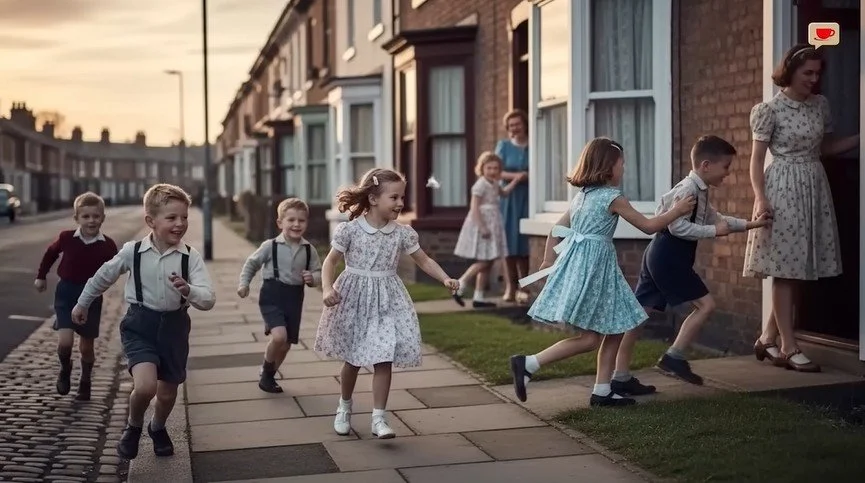
British Time Capsule; preserving British culture — What It Was Like to be a Child in 1950’s Great Britain
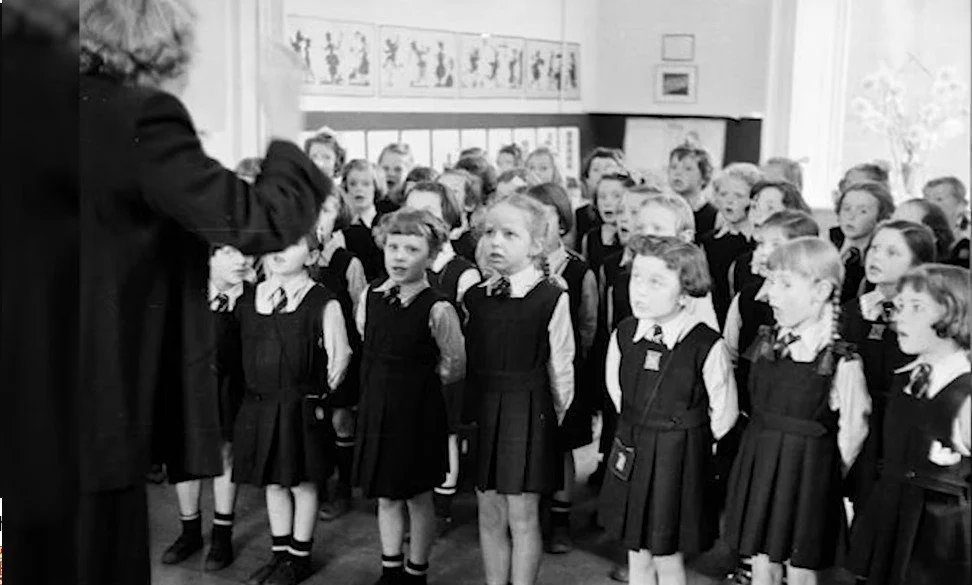
British Time Capsule; preserving British culture — Ten Memories of British School Life in the 1950’s
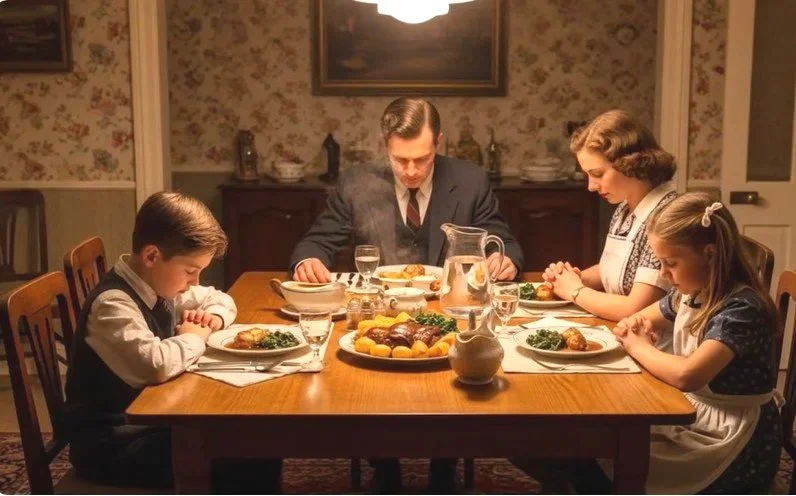
Learning Canteen — What It Was Really Like to Grow Up In Britain During The 1950’s

Learning Canteen — What It Was Really Like to Grow Up in Britain During The 1960’s
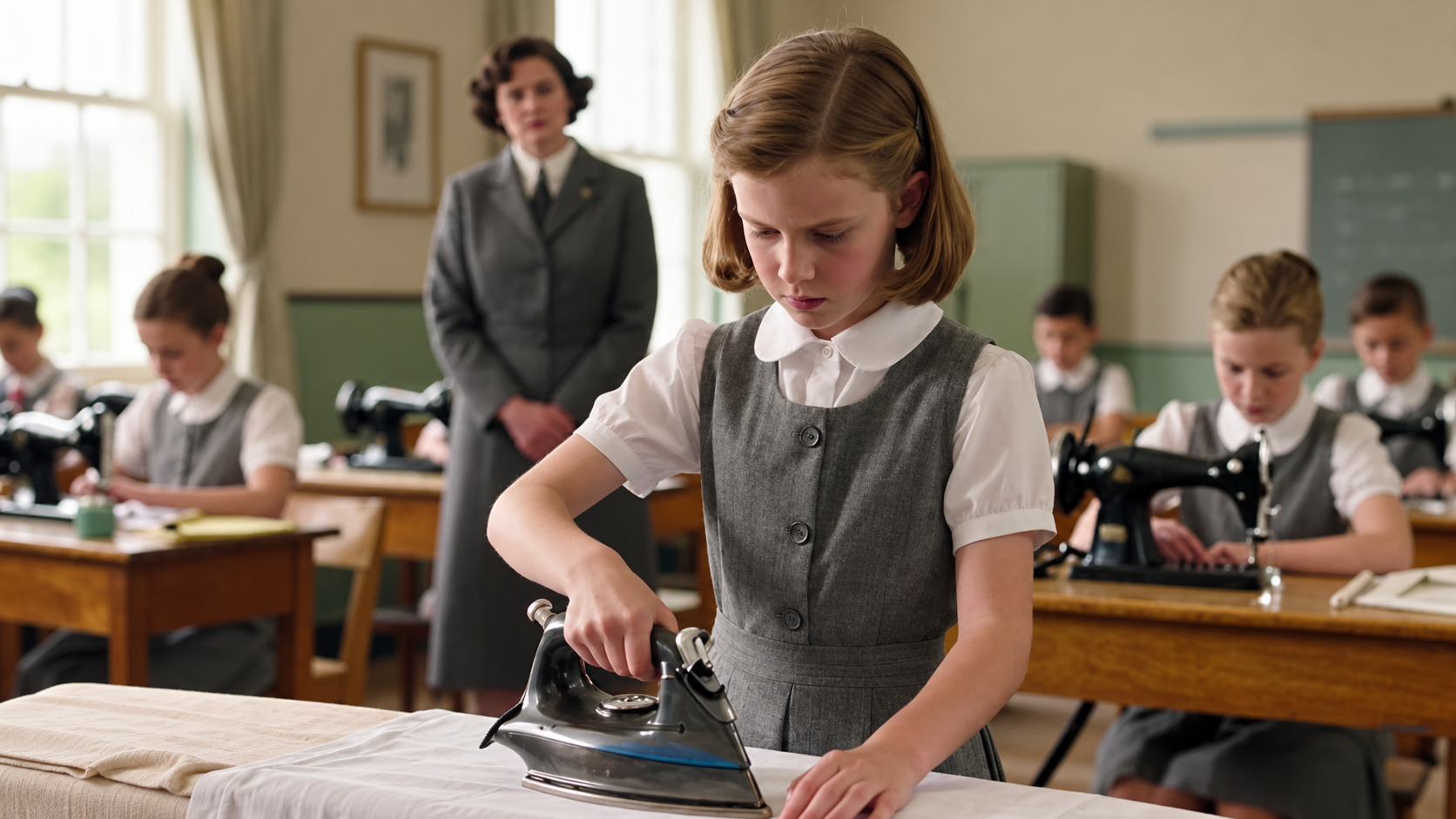
UK Rewind — Educational Expectations for Girls in 1960’s Britain

UK Rewind — Proper Manners